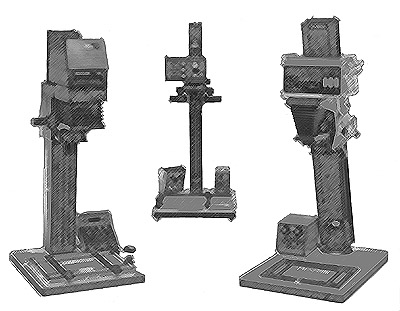
| There are used enlarger bargains out there
to be had, but as with buying most any used merchandise, the more you
know and the better prepared you are, the better the result. We
suggest that you consider the following:
1. Is the enlarger the right size for
your needs? It may sound pretty basic, but some people
have purchased enlargers and then found that they weren't capable of
handling the negative sizes they intended to print. Ensure that
you know the specifications of the enlarger, and consider the maximum
negative size you'll need to accommodate. In addition,
be aware that enlargers with standard column lengths will give you a
maximum print size on the baseboard of about 11"x14" (with the
appropriate lens for the format you're working with.) Beyond that,
you have to project on the floor. An XL column allows up to
approximately 16"x20" prints, but you'll have to be sure that
the extra height will fit in the area in which you intend to use
it. Measure the counter to ceiling height you have available and
compare that to the maximum height the enlarger requires when the head
is all the way to the top of the column.
2. Is the enlarger complete?
Do your homework before you buy. We've seen quite a few people who
believed they got a great deal on enlarger only to discover that
the additional parts they required - lensboards, lens mounts, negative carriers,
autofocus tracks, condenser sets, etc. - would cost
much more than they had paid for the enlarger. Check the used
enlarger to determine if it has all the parts and accessories that will
be required to use it as you intend. If not, get prices on the
additional items you will need before you make your purchase.
Particularly with the older enlargers, some items may be very expensive
and/or difficult to get. You may find that the "great
deal" is not such a bargain after all, or worse still, unusable.
Pay particular attention with the autofocus models - they are not designed for manual focusing and must
have an autofocus track for each focal length of lens you intend to
use.
3. Is the enlarger in good working
order? You'll have to examine the enlarger for damage and
wear. Enlargers which have been subject to heavy use in
professional labs and schools may require extensive servicing before
they can perform reliably. Condenser lenses should be clear and
free of chips and scratches. There will always be some sort of spacer
to keep them apart - they should never be touching and should show no
signs that they have been touching! Focusing mechanisms
should be firm and not exhibit free play - it may only require an
adjustment, but it could also indicate that parts need to be replaced.
Also check around pivot points for holes that have become oval and
threaded parts that have become worn or partially stripped. Color
heads should always be tested to ensure that the power supply is
functioning properly and that the filter mechanisms work as they
should. Mixing chambers should also be examined for damage.
One other point to note is that most used enlargers will
require an alignment. After being jammed in attics, closets,
basements, and garages, it's doubtful
that an enlarger will still be properly aligned. This can affect
light distribution and the ability to focus properly. There are
alignment tools available so that you can do this yourself, but specific
instructions for adjusting your particular enlarger may not be
provided. If in doubt, take it to a service center.
If you're not confident in your ability
to evaluate and repair used enlargers, consider purchasing a refurbished enlarger
from a capable service facility, such as ourselves. While you may pay
more up front, you'll get an enlarger you can use immediately and
depend on, a warranty, knowledgeable advice, and a copy of the instruction
manual.
|